Immerse yourself in the harmonious blend of Japanese and Scandinavian aesthetics with a Japandi living room. Discover the essence of this unique style as it marries simplicity, nature, and elegance in a space designed for tranquility and balance.
Delve into the intricate details of color palettes, furniture selection, natural elements, lighting choices, decor preferences, and personal touches that define the art of creating a Japandi living room.
Introduction to Japandi Living Room
Japandi style in interior design is a harmonious fusion of Japanese minimalism and Scandinavian functionality, creating a unique aesthetic that focuses on simplicity, natural elements, and craftsmanship.
Key Characteristics of a Japandi Living Room
A Japandi living room typically features:
- Neutral Color Palette: Emphasis on earthy tones like grey, beige, white, and black to create a calm and serene atmosphere.
- Minimalist Furniture: Clean lines, simple designs, and functional pieces that prioritize comfort and practicality.
- Natural Materials: Wood, bamboo, stone, and other organic materials are used to bring warmth and texture to the space.
- Indoor Greenery: Incorporation of plants and natural elements to add a touch of nature and enhance the overall ambiance.
- Clutter-Free Space: Focus on decluttering and organization to maintain a sense of order and tranquility.
Color Palette
In Japandi living rooms, the typical color palette combines the calming, neutral tones of Scandinavian design with the earthy, natural hues found in Japanese aesthetics. This blend creates a harmonious and balanced atmosphere that is both minimalist and cozy.
Comparison of Color Choices
Japanese design often incorporates warm, earthy tones like beige, brown, and green to reflect nature and create a sense of tranquility. On the other hand, Scandinavian design favors cool, neutral colors such as white, grey, and light wood tones to enhance brightness and simplicity.
When combined in Japandi style, these color palettes complement each other beautifully, creating a space that feels both warm and airy.To incorporate the Japandi color scheme in a living room, consider using a neutral base of white or light grey on walls and large furniture pieces.
Add warmth with wooden accents in light or medium tones, such as oak or ash. Introduce pops of color sparingly through textiles like cushions, rugs, or artwork, using earthy shades like moss green, rust red, or mustard yellow. The key is to maintain a balance between light and dark, warm and cool tones to achieve the serene and inviting look characteristic of Japandi design.
Furniture and Layout
In a Japandi living room, the furniture plays a crucial role in blending Japanese minimalism with Scandinavian functionality and aesthetics. Here we will explore the essential furniture pieces, the minimalist approach to furniture arrangement, and tips on selecting furniture that embodies both design styles.
Essential Furniture Pieces for a Japandi Living Room
- Low-profile seating: Opt for low sofas, floor cushions, or tatami mats to create a cozy and intimate seating area.
- Wooden coffee table: Choose a sleek, simple wooden coffee table that reflects the natural elements present in both Japanese and Scandinavian design.
- Storage solutions: Incorporate minimalist shelving units or cabinets to keep the space clutter-free and organized.
- Neutral-toned rugs: Add warmth and texture to the room with a neutral-toned rug that complements the overall design aesthetic.
Minimalist Approach to Furniture Arrangement in Japandi Design
In a Japandi living room, less is more when it comes to furniture arrangement. Embrace open spaces and focus on creating a harmonious balance between function and aesthetics. Keep the layout simple and uncluttered to allow the furniture pieces to stand out and make a statement.
Tips on Selecting Furniture that Embodies Both Japanese and Scandinavian Aesthetics
- Natural materials: Look for furniture made from natural materials like wood, bamboo, or linen to capture the essence of both design styles.
- Clean lines: Opt for furniture with clean lines and minimalistic designs that reflect the simplicity and elegance of Japanese and Scandinavian aesthetics.
- Mix and match: Experiment with combining traditional Japanese furniture pieces like a tatami mat with Scandinavian modern pieces to create a unique and cohesive look.
- Functional pieces: Choose furniture that not only looks beautiful but also serves a practical purpose, reflecting the practicality and functionality valued in both Japanese and Scandinavian design.
Natural Elements and Textures
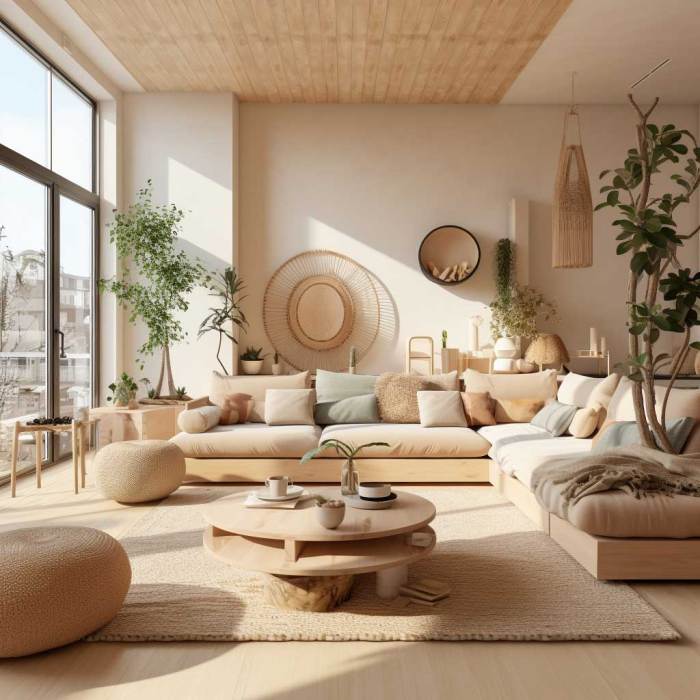
Integrating natural elements and textures into a Japandi living room is essential to create a harmonious and calming space that embodies the principles of both Japanese and Scandinavian design.
Importance of Natural Elements
Wood and stone are key elements in Japandi decor, as they bring warmth, texture, and a sense of grounding to the space. The use of natural materials like oak, walnut, and bamboo in furniture and decor pieces adds a touch of organic beauty and authenticity.
Textures in Japandi Decor
- Linen: Incorporating linen upholstery for sofas and throw pillows adds a soft and breezy feel to the room, enhancing the overall comfort and coziness.
- Wool: Wool rugs and blankets provide a sense of warmth and luxury, while also introducing a tactile element that invites relaxation and comfort.
- Rattan: The use of rattan furniture, such as chairs or coffee tables, brings a natural and earthy texture to the space, creating visual interest and depth.
Bringing Nature Indoors
Embrace the beauty of nature by adding greenery through potted plants or a small indoor garden. Incorporate elements like driftwood, stones, or seashells as decorative accents to infuse a touch of nature-inspired tranquility into your Japandi living room.
Lighting
Lighting plays a crucial role in setting the mood and ambiance of a Japandi living room. It helps create a cozy and inviting atmosphere while highlighting the natural elements and textures in the space.
Types of Lighting Fixtures
- Pendant Lights:Pendant lights are a popular choice for Japandi living rooms as they provide focused lighting and add a touch of modern elegance to the space.
- Floor Lamps:Floor lamps with warm, soft light can help create a relaxing environment in the room, perfect for unwinding after a long day.
- Paper Lanterns:Traditional Japanese paper lanterns can add a cultural touch to the space while emitting a soft, diffused light that enhances the overall ambiance.
Optimizing Natural Light
Maximize natural light in your Japandi living room by keeping window treatments minimal and choosing sheer curtains or blinds that allow sunlight to filter through. Positioning mirrors strategically can also help reflect and amplify natural light throughout the space.
Soft, Warm Lighting
- Dimmer Switches:Installing dimmer switches for overhead lights or wall sconces allows you to adjust the brightness levels and create a more intimate setting in the evenings.
- Candles:Adding candles in various sizes and scents can bring a cozy and calming atmosphere to your Japandi living room, perfect for relaxation or entertaining guests.
- Table Lamps:Opt for table lamps with soft, warm-toned bulbs to provide additional lighting while complementing the overall design aesthetic of the room.
Decor and Accessories
In Japandi living rooms, minimalistic decor and accessories play a crucial role in creating a harmonious and balanced space that reflects both Japanese and Scandinavian aesthetics.
Examples of Decor Items
- Ceramics: Simple and elegant pottery pieces like vases, bowls, or plates can add a touch of sophistication to the room.
- Plants: Incorporating greenery such as bonsai trees, bamboo, or small potted plants brings a sense of nature indoors, promoting a calming atmosphere.
- Artwork: Opt for subtle and abstract paintings or prints that complement the neutral color palette of Japandi style, adding a focal point without overwhelming the space.
Balancing Functionality and Aesthetics
When choosing decor and accessories for a Japandi living room, it's essential to strike a balance between functionality and aesthetics. Select pieces that not only look beautiful but also serve a purpose or add value to the space. Avoid clutter and opt for quality over quantity to maintain the minimalist essence of Japandi style.
Plants and Greenery
Indoor plants play a vital role in Japandi decor, adding a touch of nature and tranquility to the living space. They are not just decorative elements but also contribute to the overall ambiance and well-being of the room.
Benefits of Incorporating Greenery
- Enhances air quality by reducing toxins and increasing oxygen levels.
- Creates a calming and relaxing atmosphere, promoting mental well-being.
- Adds a pop of color and visual interest to the room.
- Brings a sense of connection to the natural world indoors.
Ideas for Plant Types
- Japanese Peace Lily: Known for its elegant foliage and air-purifying properties.
- Bonsai Tree: Symbolizes harmony, balance, and tranquility in Japanese culture.
- Sansevieria (Snake Plant): Requires minimal care and thrives in low light conditions.
- Sakura (Cherry Blossom): Represents the fleeting beauty of life and the changing seasons in Japanese aesthetics.
Personalization and Individual Touch
Adding personal touches to a Japandi living room is a wonderful way to make the space truly feel like your own while still honoring the minimalist and harmonious essence of the style.
How to Personalize a Japandi Living Room
- Choose a few key personal items that hold sentimental value to you, such as family heirlooms, travel souvenirs, or handmade crafts.
- Display these items strategically throughout the room, making sure they blend seamlessly with the overall aesthetic of Japandi design.
- Consider incorporating textiles like throw pillows, blankets, or rugs in colors or patterns that reflect your personality and style.
Importance of Incorporating Personal Items
Including personal items or memories in your Japandi living room decor adds a layer of warmth and character to the space. It creates a unique atmosphere that is a true reflection of who you are and what you value.
Tips for Adding Individual Touches
- Avoid cluttering the space with too many personal items. Select a few meaningful pieces that can stand out without overwhelming the minimalist design.
- Experiment with different placements and arrangements to find the right balance between personalization and maintaining the clean lines of Japandi style.
- Consider incorporating elements of nature, such as a vase of fresh flowers or a small indoor plant, to bring life and a personal touch to the room.
Ultimate Conclusion
As we conclude this exploration of Japandi living rooms, envision a space that radiates serenity and sophistication. With a careful balance of elements and a thoughtful curation of design choices, you can transform your living area into a tranquil retreat that reflects your unique style and appreciation for the beauty of simplicity.
Detailed FAQs
How can I incorporate both Japanese and Scandinavian aesthetics in my living room?
To achieve a Japandi style, focus on minimalism, natural elements, neutral colors, and a careful selection of furniture that embodies the essence of both design philosophies.
What are some key characteristics of a Japandi living room?
A Japandi living room typically features a minimalist design, a neutral color palette, natural materials like wood and stone, and a balance between functionality and aesthetics in decor choices.
Why is lighting important in creating a cozy Japandi ambiance?
Lighting plays a crucial role in setting the mood and enhancing the atmosphere of a Japandi living room. Soft, warm lighting can create a sense of warmth and tranquility in the space.